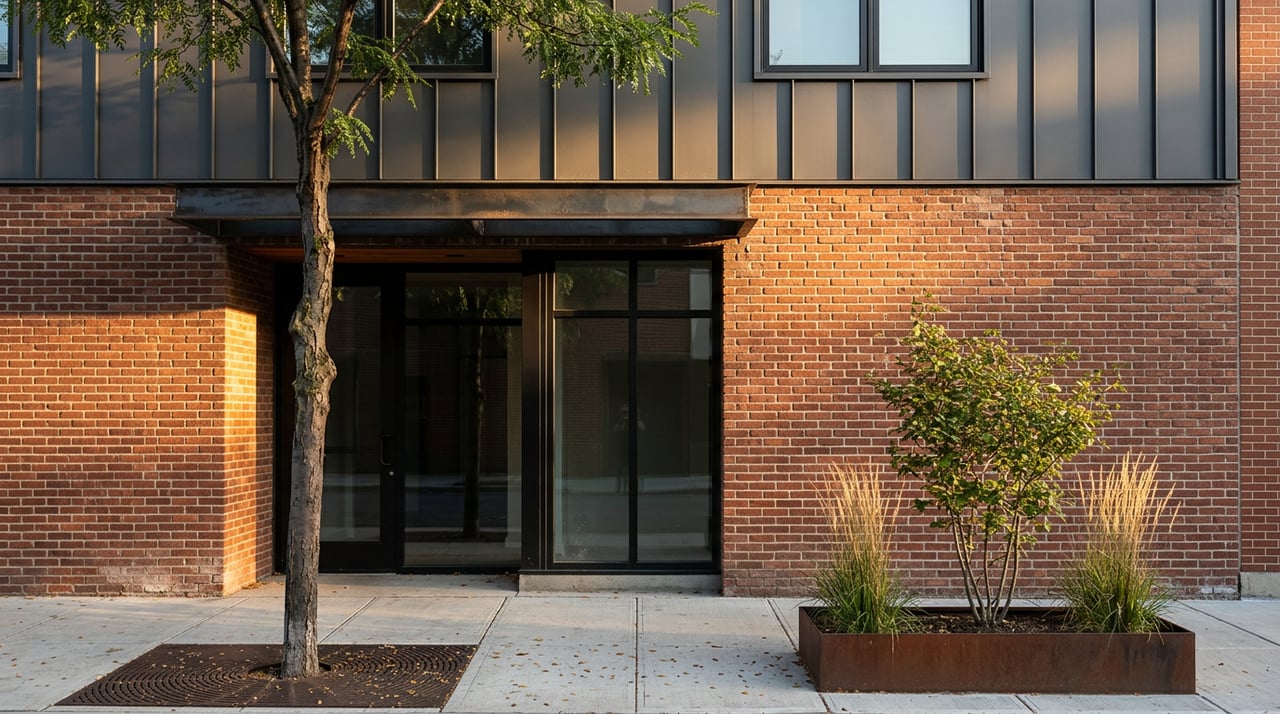
Chef James Africano has run The Warehouse restaurant from the same brick corner of Cimarron and Sahwatch for 30 years. For 23 of those years, he said, the building was "kind of on an island." No apartments nearby, no foot traffic after dark, nothing pulling people down that block except the restaurant itself. That changed enough in the last seven years that on July 18, Africano opened a second business two doors down: a chef-run grocery store called Urban Grocer, tucked into what used to be his event and gallery space.
If you live downtown, you've probably already walked past the construction dust and the new signage at 29 W. Cimarron St. What's worth understanding is not just that a grocery store opened. It's why it opened now, in 2026, after sitting as an idea for years, and what it means for the rest of your week if you're one of the residents who prompted it.
The math behind the wait
Downtown Colorado Springs has added more than 2,000 residential units in the city center since 2016, with another 1,000-plus expected by the end of 2026. That pace has pushed the downtown population to nearly 5,000 people, a figure the Downtown Partnership describes as a near-doubling over 2025 alone. That's not gradual growth. That's a neighborhood that roughly doubled its resident count in about a year.
A grocery store is a volume business. For most of Africano's three decades on that corner, there weren't enough people living within walking distance to support one. The apartments arrived first: the buildings around Weidner Field, home of the Colorado Springs Switchbacks FC, plus new construction along South Tejon Street. The restaurants followed the residents. Africano's grocery store followed the restaurants, or more precisely, followed the point where downtown crossed from "a place people visit for dinner" to "a place enough people go home to at night that they need milk on a Tuesday."
"We want to keep people downtown," Africano told KOAA the week Urban Grocer opened. "There's so many people living down here now. I don't want them to have to run outside of here to go get things."
What actually showed up on July 18
Urban Grocer is open seven days a week, 8 a.m. to 8 p.m., which already tells you it's built for daily errands rather than weekly big-box runs. Inside, there's a full-service deli, a butcher counter, a seafood counter, house-made pasta and sauces, baked goods, and a rotating selection of Colorado-made pantry items.
The pricing spread is intentional. Africano has described stocking both a $3 can of Starkist tuna and a $28 tin of Spanish tuna poached in butter on the same shelf, on purpose, so the store works for a quick weeknight dinner and a Sunday project meal without forcing a choice between the two. The butcher case carries elk, yak, and rabbit alongside the more familiar beef and pork, though the prepared meals are a deliberate departure from what The Warehouse serves next door. Where the restaurant is known for elk, lobster, and quail, the grocery's grab-and-go cases lean toward meatloaf and mashed potatoes, braised short ribs, beef stroganoff, and curried chicken bowls. It's a different register entirely: dinner you reheat, not dinner you order.
The buildout took longer than planned. Construction started in January 2026 with a 100-day estimate, and the age of the building pushed that past six months. "This is, after all, a 130-year-old building," Africano said of the delay. It's a small detail, but it's the kind of friction that anyone who's ever renovated an older downtown property in this city will recognize.
It isn't really competing with Bread and Butter
Urban Grocer isn't downtown's first grocery option. Bread and Butter Market has been operating a few blocks over for roughly six years now, built around fresh produce and a smaller upscale format. For most of that run, it was the only grocery game in the neighborhood.
The two stores don't overlap much in practice. Bread and Butter is the produce and staples stop. Urban Grocer is the deli, butcher, and heat-at-home stop. Put together, they cover most of what a downtown household actually needs during the week without a drive to a supermarket outside the core. That's the more useful way to think about this summer's opening: not as new competition, but as the second half of a system that finally has both halves.
The weekly loop, mapped out
Between the two grocery stores and downtown's existing market days, a resident can now build a full week of food sourcing without leaving the core. Here's what that actually looks like right now, through October:
| Day | What | Where | Hours |
|---|---|---|---|
| Tuesday | Food Truck Tuesdays | Alamo Square Park (south side) | Runs through summer |
| Wednesday | Colorado Farm & Art Market | The Meanwhile Block, Alamo Square Park (425 S Sierra Madre St.) | Through Oct. 9 |
| Sunday | Downtown Farmers Market | Acacia Park | 9 a.m. to 2 p.m., through Oct. 25 |
| Daily | Urban Grocer | 29 W. Cimarron St. | 8 a.m. to 8 p.m. |
| Daily | Bread and Butter Market | Downtown core | Standard grocery hours |
None of these are new additions built specifically to solve a downtown food gap. The Sunday and Wednesday markets have run for years. What's new is that the daily gaps between market days finally have a real answer instead of a workaround.
The plan behind the timing
This isn't happening in isolation. Urban Grocer's opening marks the first visible step of Elevate Downtown, a growth plan the Downtown Partnership proposed and Colorado Springs City Council approved in May 2026. Downtown Partnership CEO Chelsea Gondeck has pointed to the opening as a reflection of how much the area has changed in a short window, and the timing lines up with the density numbers: a plan built around supporting more residents arrives the same year the resident count nearly doubles.
For Africano, the personal stakes are plain. He's watched the same corner sit quiet for two decades and come alive in the last several years with the stadium, the apartments, and the restaurants on South Tejon. Opening a grocery store in the old event space wasn't a pivot away from the restaurant business. It was a bet that the neighborhood around it had finally caught up to what the corner could support.
What this actually changes for your week
If you live in one of the newer buildings downtown, this is the practical version of the story: your Tuesday food truck stop, Wednesday market run, Sunday farmers market visit, and the five other nights of the week now have a genuine daily-grocery backstop two blocks from most of the recent apartment stock. That's a real change from even a year ago, when the honest answer to "where do you buy groceries downtown" was either Bread and Butter's smaller footprint or a drive out of the core.
None of this requires a decision about buying or selling anything. It's just a useful fact about the neighborhood you already call home, and a reminder that the next few years downtown are likely to keep filling in gaps like this one as the population keeps climbing toward whatever comes after 5,000.
If you're weighing what a shift like this means for your own plans in Colorado Springs, whether that's a move within the city or a decision about where to put down roots next, Erik Galloway and The Galloway Group track these neighborhood shifts closely. Get Your Free Home Roadmap and let's talk through what you're seeing on the ground.